Quick Takeaways:
- Elevators are non-negotiable for inclusivity and high-volume guest flow in HK's vertical landscape.
- Stairs serve as critical emergency egress but are impractical for primary guest access above the 4th floor.
- Modern HK rooftop bars prioritize a 'seamless flow' to maximize revenue and guest satisfaction.
- Accessibility laws in Hong Kong are evolving, pushing venues toward universal design.
The Vertical Challenge of Hong Kong
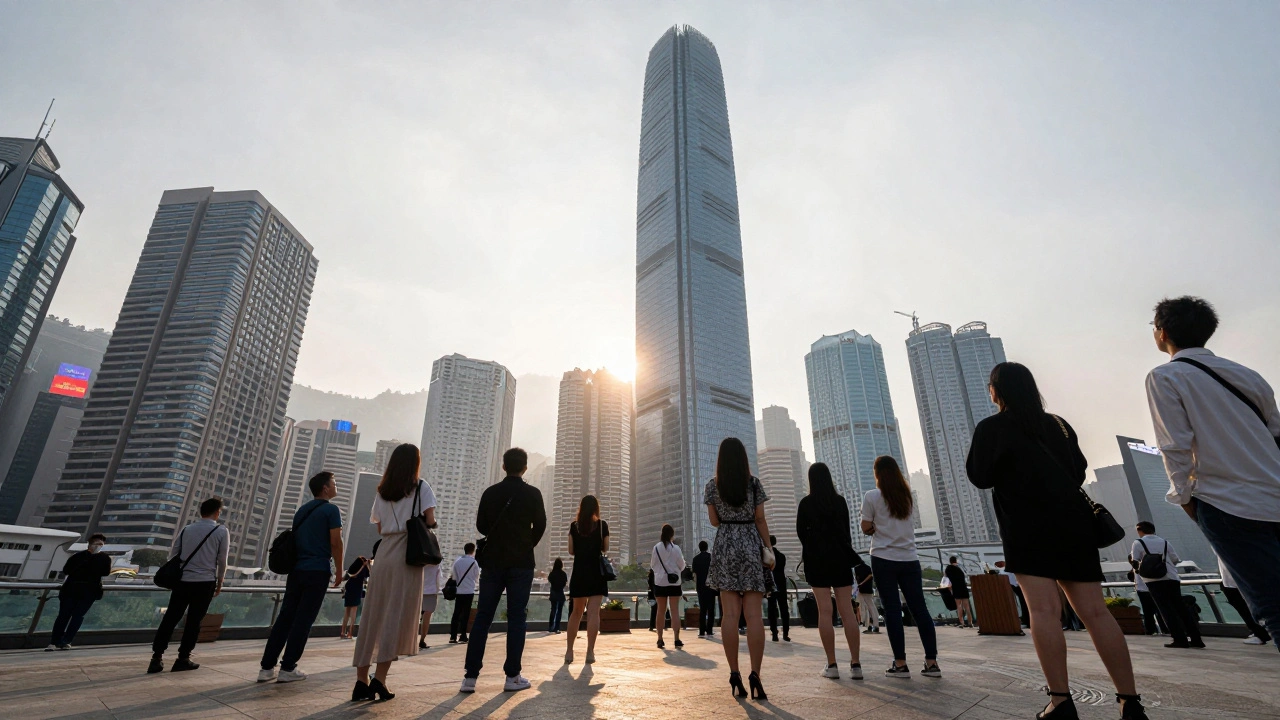
Hong Kong is essentially a city built upward. When we talk about rooftop bars commercial hospitality venues located on the top floors of high-rise buildings designed to offer panoramic city views, we aren't talking about a two-story walk-up. We are talking about structures that often exceed 50 stories. In this environment, the method of ascent dictates the entire user experience.
For a guest, the journey begins long before the first sip of a drink. If a venue relies heavily on stairs for the final few levels, they immediately alienate a huge portion of their potential market, including the elderly, people with mobility impairments, and even those just wearing high heels. In a city where the Central-Mid-Levels escalator the world's longest outdoor covered escalator system moving people from Central to Mid-Levels has trained residents to avoid unnecessary climbing, a "stairs-only" policy for a rooftop is a business risk.
Elevators: The Gold Standard for Accessibility
When you're dealing with a high-rise, elevators vertical transport platforms that move people between floors via a pulley or hydraulic system are the only way to ensure a venue is truly accessible. But it's not just about having a lift; it's about how that lift is managed. Many Hong Kong high-rises use a "zoning" system where certain elevators only stop at specific floors to reduce wait times.
From a business perspective, elevator access increases the "capture rate" of a venue. If a guest knows they can get to the 80th floor in 40 seconds, they are more likely to visit. Contrast this with a venue that requires a transfer from a main lift to a smaller, slower service elevator or a final flight of stairs. That friction point is where you lose customers. High-end venues in the International Commerce Centre (ICC) or the IFC towers utilize high-speed lifts to make the transition from the street to the sky feel instantaneous.
| Feature | High-Speed Elevators | Service/Fire Stairs |
|---|---|---|
| Guest Experience | Premium, fast, effortless | Strenuous, slow, utilitarian |
| Capacity | High (depending on lift bank size) | Low (bottlenecks during peak hours) |
| Accessibility | Universal (Wheelchair/Elderly) | Restrictive (Able-bodied only) |
| Primary Purpose | Daily transport and luxury access | Emergency egress and maintenance |
| Operational Cost | High (maintenance and electricity) | Low (passive infrastructure) |
The Role of Stairs: More Than Just a Backup
You might think stairs are obsolete in a skyscraper, but fire stairs specialized stairwells designed for emergency evacuation and smoke containment in high-rise buildings are the most important part of the building's safety skeleton. In Hong Kong, the Fire Services Department has strict mandates on how these stairs are constructed. They aren't meant for your cocktail run; they are meant for getting 500 people out of a building safely during a power failure.
However, some architects use "architectural stairs" as a design feature. These are wide, sweeping staircases that connect the penultimate floor to the rooftop. While they add a sense of drama and allow guests to see the view unfold, they must be secondary to the elevator. A common mistake in some older converted industrial buildings in districts like Kwun Tong is relying on these stairs for primary access, which creates a logistical nightmare for staff moving heavy furniture or kegs of beer to the rooftop.
Navigating Hong Kong's Building Regulations
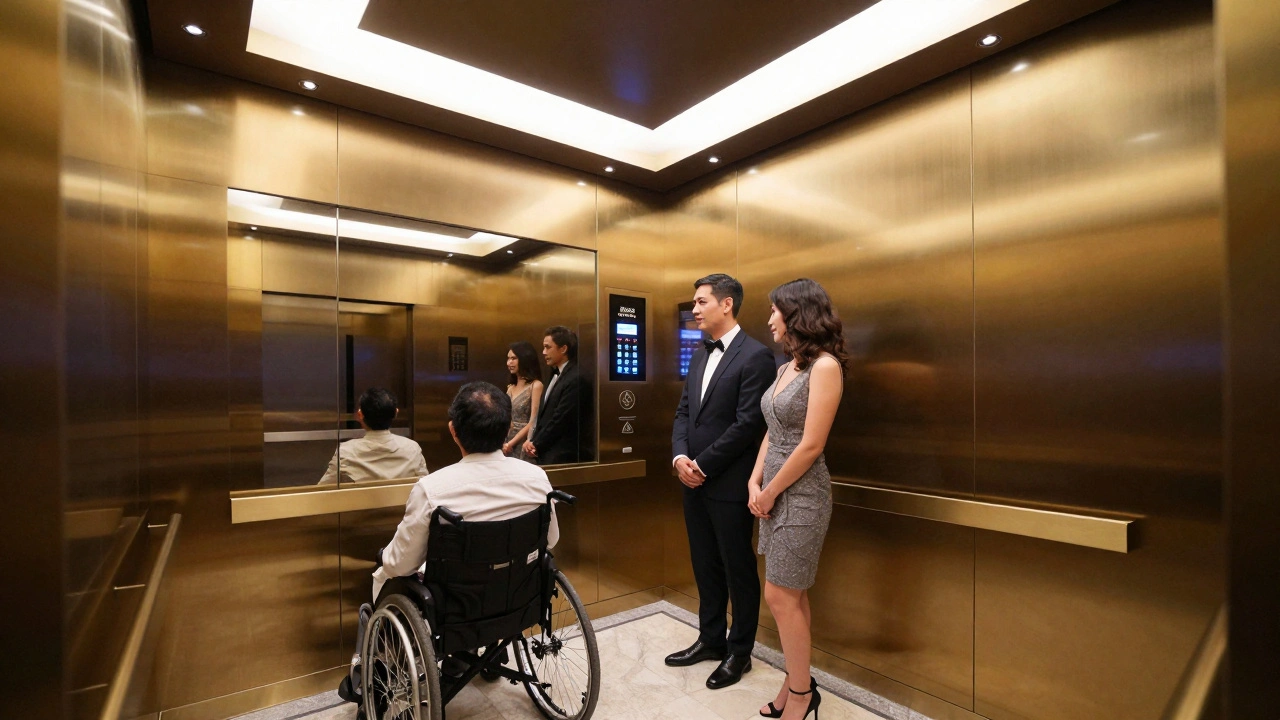
Accessibility isn't just a nice gesture; it's increasingly tied to legal standards. While older buildings in Hong Kong were constructed with a "utility first" mindset, newer developments must adhere to more stringent Universal Design the design of products and environments to be usable by all people, to the greatest extent possible, without the need for adaptation principles. This means that for a new rooftop bar to get its license, the path from the entrance to the bar stool must be barrier-free.
The struggle often arises in "retrofitting." If a developer wants to put a bar on top of a 1970s residential-commercial hybrid, they might find that the original elevators are too small for wheelchairs or too slow for the expected foot traffic. Adding a new elevator shaft is an engineering nightmare and incredibly expensive. In these cases, venues often try to compensate with "assisted access," but as anyone in a wheelchair will tell you, being "helped" up a set of stairs is not the same as having an accessible entrance.
Practical Trade-offs for Venue Owners
If you're operating a rooftop, you're balancing three things: square footage, speed of service, and inclusivity. Every square meter taken up by a stairwell or an elevator lobby is a square meter where you can't put a table. But if the lift is too slow, your guests spend 15 minutes of their hour-long visit just waiting to go up and down.
A pro tip for high-rise accessibility is the "express loop." Some of the most successful rooftops use a dedicated express lift that bypasses all office floors and goes straight to the lounge. This removes the awkwardness of guests stepping out into a corporate law firm on the 42nd floor while wearing party attire. It also prevents the "elevator jam" where office workers and party-goers are fighting for the same small space during the 6:00 PM rush.
The Psychological Impact of the Ascent
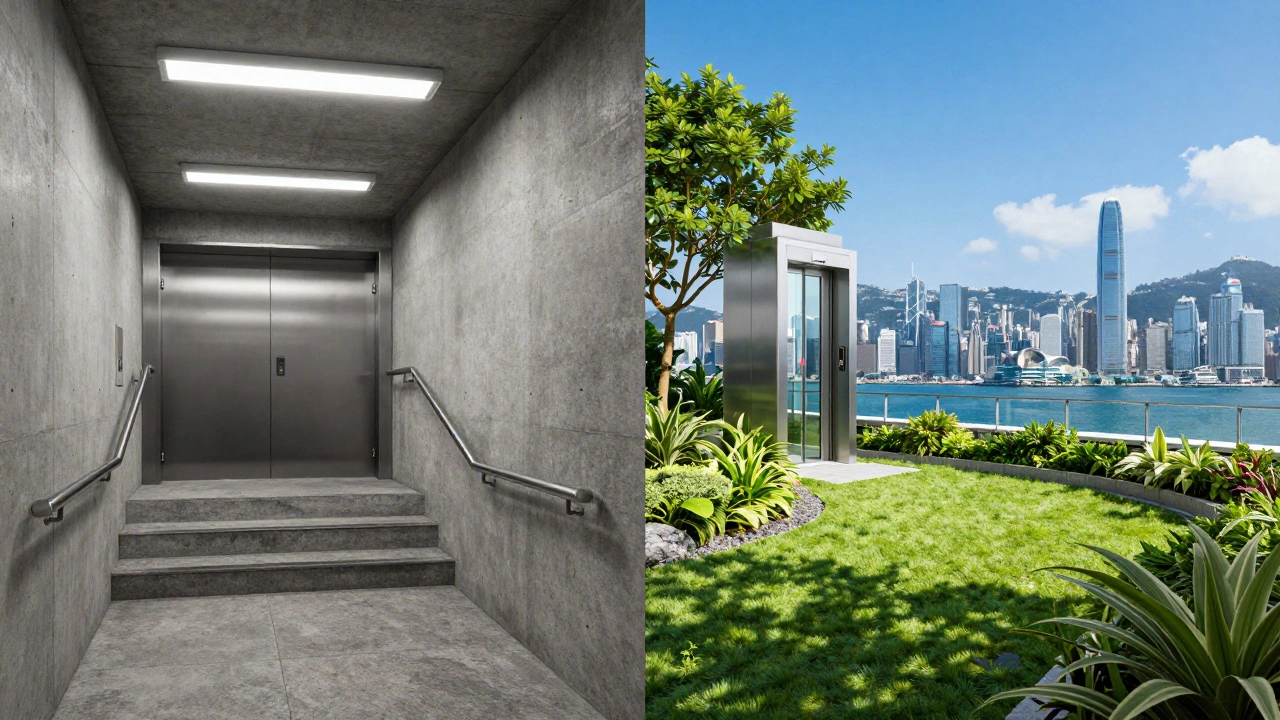
There is a psychological element to how people perceive a rooftop experience based on how they get there. Elevators provide a "reveal." The doors open, and suddenly you are in a different world-from the concrete jungle of the street to a lush garden in the sky. This transition is part of the luxury appeal. Stairs, on the other hand, provide a "climb." While this can feel like an achievement, it's rarely the vibe people want when they've paid $20 for a drink.
The only time stairs actually win is in "boutique" or "hidden" settings where the climb is part of the adventure. In the narrow alleys of Sheung Wan, a few flights of stairs can make a place feel like a secret club. But once you hit the high-rise territory, the adventure of climbing becomes a chore. The goal of a high-rise rooftop is to make the city feel small, not to make the guest feel small by forcing them to hike to the finish line.
Are all rooftop bars in Hong Kong wheelchair accessible?
No. While newer buildings follow Universal Design standards, many older high-rises have limited elevator capacity or final-floor staircases that make full accessibility impossible without assistance. It is always best to check the venue's specific accessibility policy before visiting.
Can I use the fire stairs to get to a rooftop bar faster?
Generally, no. Fire stairs are strictly for emergency egress and maintenance. For security reasons, these doors are usually locked from the inside or alarmed to prevent unauthorized access to the rooftop.
How do high-rise elevators handle the huge crowds during peak hours?
Many high-rises use destination-control systems where you select your floor on a keypad before entering the lift. This groups people going to the same floor together, reducing the number of stops and increasing efficiency.
Do stairs provide a safer exit than elevators during a fire?
Yes. In the event of a fire, elevators are typically programmed to return to the ground floor and remain there, as they can become death traps due to smoke inhalation or power failure. Fire-rated stairwells provide a protected path to the exit.
Why are some rooftop bars only accessible via a service lift?
This usually happens in buildings not originally designed for public hospitality. The service lift is the only one with the weight capacity or height clearance to reach the roof, forcing the venue to use it for guests.
Next Steps for Visitors and Operators
If you're a guest, don't assume. When booking a high-rise venue, a quick message asking about "barrier-free access" can save you from a stressful arrival. If you're a venue operator, look into your "last mile" of access. If your guests have to walk even ten steps up a flight of stairs after the elevator, you're losing a percentage of your potential revenue.
For those designing new spaces, prioritize the elevator lobby as a transition zone. Use lighting and music in the lift to build anticipation. The transition from the ground to the rooftop is the opening act of your guest's experience-make sure it doesn't feel like a workout.
